
Written by Harvey Lew
Hi, I’m Harvey, a third year (almost) medical student at Charles Sturt, and I’ve become convinced that imposter syndrome should honestly count as part of the curriculum because every student I know experiences it constantly. It appears out of nowhere and it doesn’t care whether you have had a good week or a bad one. You can be feeling confident and comfortable and even slightly proud of yourself, and then one tricky question or one confident sounding peer can send you spiralling straight back into wondering whether admissions made a clerical error the year you applied.
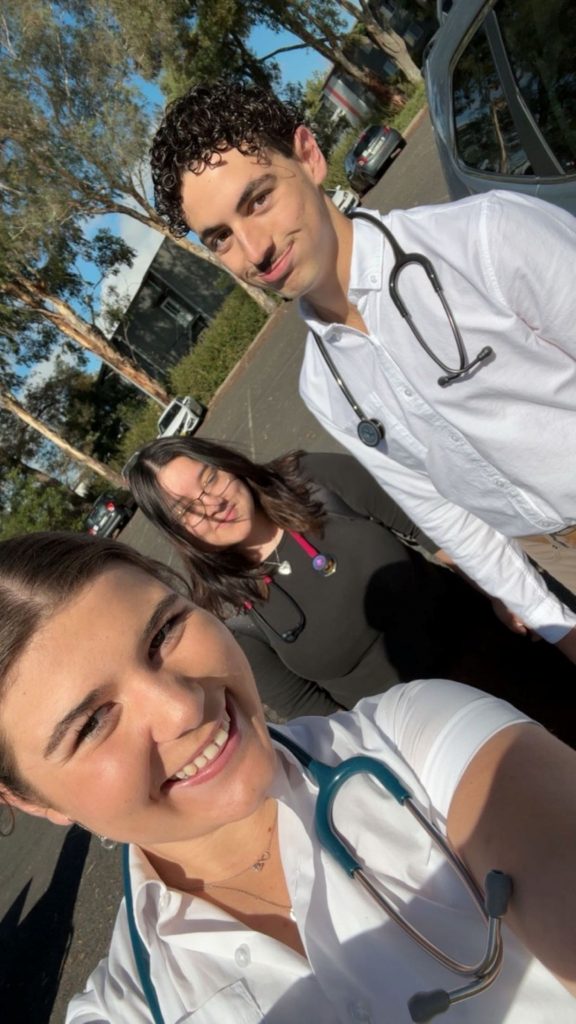
For me, it usually shows up when I’m around people who seem frighteningly competent. Someone will drop an obscure fact into a casual conversation, and I will immediately decide that I’ve learned nothing useful in months. The ridiculous part is that those same people usually feel exactly the same way, and they’re often convinced that I am the one who knows what he’s doing. Everyone is comparing themselves to everyone else, and no one is winning.

Things shifted a little when I started realising that confidence and competence do not always travel together, and they definitely don’t arrive on schedule. Some of the most capable students I know are the ones who doubt themselves the most, and some of the most outwardly confident people are secretly panicking and refreshing their notes whenever no one is looking. Once you see that everyone is guessing their way forward, it becomes much easier to forgive yourself for doing the same.

Talking to older students helped even more, because they all had stories about moments when they felt completely lost. They reminded me that being confused is not a crime and that learning medicine is supposed to feel uncomfortable. You are not meant to know everything, and you are not meant to feel ready yet, and that is actually the point of the whole degree.

I also started noticing the small wins that quietly accumulate in the background while you’re busy doubting yourself. A patient who smiles at you. A doctor who says well done. A moment when you realise you can explain something clearly without stumbling. These tiny moments matter, and they add up in ways you don’t notice until you suddenly realise you’ve grown.
Imposter syndrome is still there, and it probably always will be, but it no longer feels like a sign that I don’t belong. It feels more like proof that I care about doing this well, and that I’m still learning, and that I’m human.
Charlie blog is a SSAF funded initiative.