
Written by Sophie Jarvis
Exam season can be stressful for any university student. Add a chronic illness or chronic fatigue to the mix, and studying suddenly becomes about a lot more than remembering lecture content.
I’ve learnt that the way I study isn’t the same as everyone else, and that’s okay. I used to compare myself to people who could spend hours in the library, but over time I’ve realised that studying in a way that works for my body is much more important than trying to keep up with everyone else.
Here are a few things that have made exam season a little easier for me.
1. Turn studying into a game
Reading the same notes over and over just doesn’t work for me, especially when brain fog decides to show up.
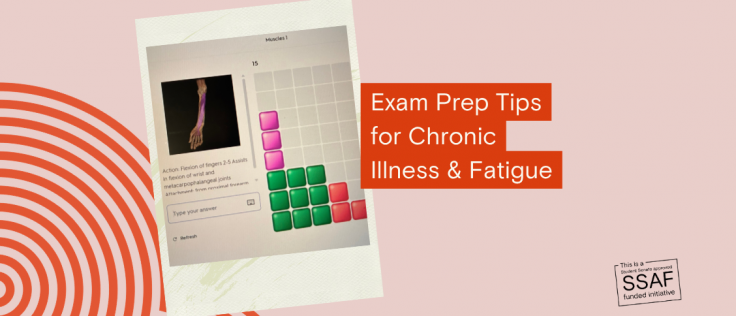
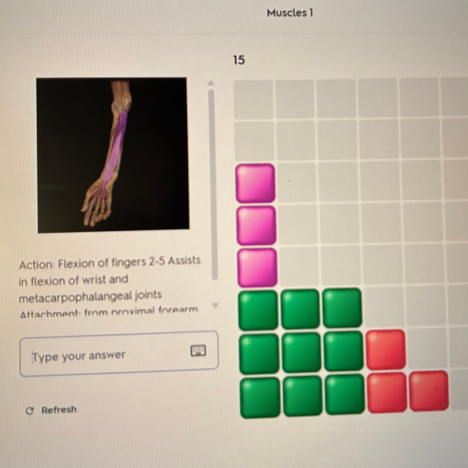
One of my favourite ways to study is by making Quizlet flashcards from my lecture notes and then using the different game modes to test myself. My personal favourite is the blocks mode. It almost feels like I’m tricking my brain into studying without realising it. When I’m focused on beating my high score instead of worrying about what I do or don’t know, I usually take in a lot more information than I expect, and I don’t end up feeling as mentally exhausted afterwards.
2. Make your own summary sheets
One of the best study tips I’ve ever been given was to fit an entire topic onto one page.
I use diagrams, colour-coding and lots of arrows to connect ideas. It helps me figure out what’s actually important instead of trying to memorise every tiny detail. By the time I’ve finished making the page, I’ve usually learnt more than I would’ve by reading my notes again.
3. Work with your energy, not against it
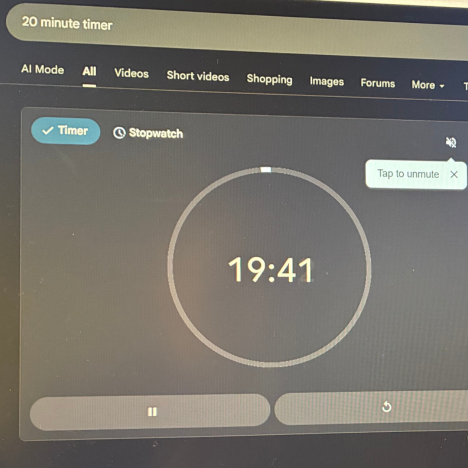
Some days I can study for a few hours. Other days, I only manage twenty minutes before I need a break. I’ve learnt that twenty focused minutes is still progress, and it’s much more productive than forcing myself to stare at a screen when I’m exhausted.
4. Test yourself instead of highlighting
I used to highlight everything, but I quickly realised colourful notes don’t always mean you’ve actually learnt the content.
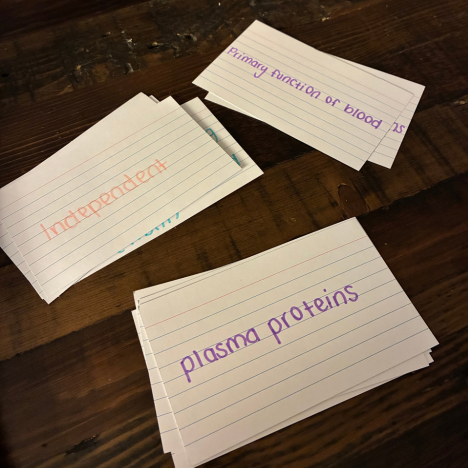
Now I close my notebook and see how much I can remember, explain topics out loud or draw diagrams from memory. It’s one of the easiest ways to work out what I actually know and what still needs a bit more revision. I also like using Quizlet or Anki flashcards, or even making my own by hand. I can pick up a few cards whenever I have a spare five minutes without feeling like I have to sit down for a full study session.
5. Don’t forget the basics
When you’re managing a chronic illness, looking after yourself is part of studying.
Before I sit down, I make sure I’ve got a drink nearby, something to snack on if I need it and anything else that helps me stay comfortable. I’ve found I concentrate so much better when I’ve taken care of everything that my body needs first.
6. Rest is part of the plan
This one took me the longest to accept.
For a long time, I felt guilty every time I took a break because I thought I should always be studying. But I’ve realised that pushing through exhaustion is unproductive and usually means I remember less instead of more.
Now, if I need to stretch, go for a short walk, make a cup of tea or simply lie down for a while, I do it without feeling guilty because I know I’ll come back with a much clearer mind.
Overall
Living with a chronic illness and seeing the way my own study habits have changed has taught me that there is no right way to study. You might study for shorter periods, need more breaks, or need more planning or flexibility during exam season. None of this makes you any less committed to your studies; it just means that you have found a routine that works for you.
At the end of the day, we all know that exams are very important, but so is your health. Looking after yourself isn’t taking time away from studying; instead, it is what makes studying possible.
Find more tips and resources on the Student Wellbeing page.
Charlie blog is a SSAF initiative.