


Written by Chloe Debono
As a university student, balancing academic responsibilities, work, a social life and self-care can be a challenge. It is easy to fall into bad habits, when things feel chaotic and unorganised.
Here are some tips and tricks that help me stay organised as a full-time university student:
Time management
- Use a calendar (digital or physical): This helps me visualise my schedule, stay on top of tasks, and clearly see when I am free.
- Creating a study schedule – Block out specific times to complete assignments, exam prep, and even pre-work. I find this super beneficial, as scheduling set tasks allowed me to stay on top of things.
Creating an organised space:
- Setting up a productive study environment – a clutter free, designated workspace keeps my mind clear, focused, and more productive
- Organise shared living spaces – if you live with roommates, consider creating a weekly cleaning schedule to delegate tasks and keep the space tide
- Maintain your personal space: Keeping my room tidy helps it remain a place where I can wind down after a busy day.
Keeping your laptop organised:
As a student I spend a lot of time on my laptop, whether that be studying, managing personal admin, and of course watching Netflix. An unorganised laptop stresses me out so here is how I keep things tidy:
- Use an online calendar that is colour coded for work, appointments, classes, personal, and events
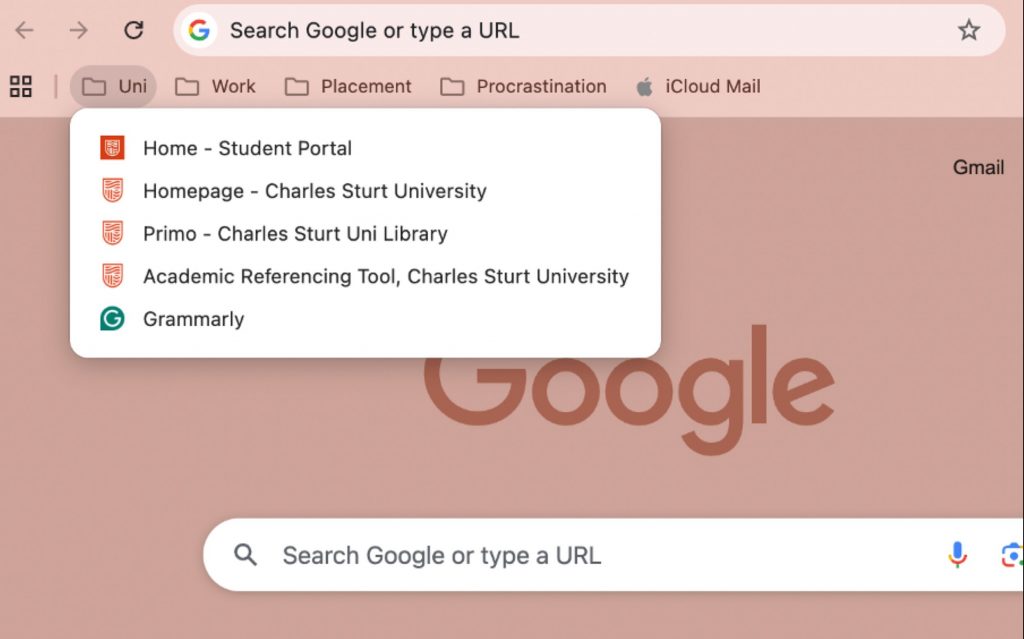
- Create folders on your favourites bar – this makes accessing important websites quick and easy
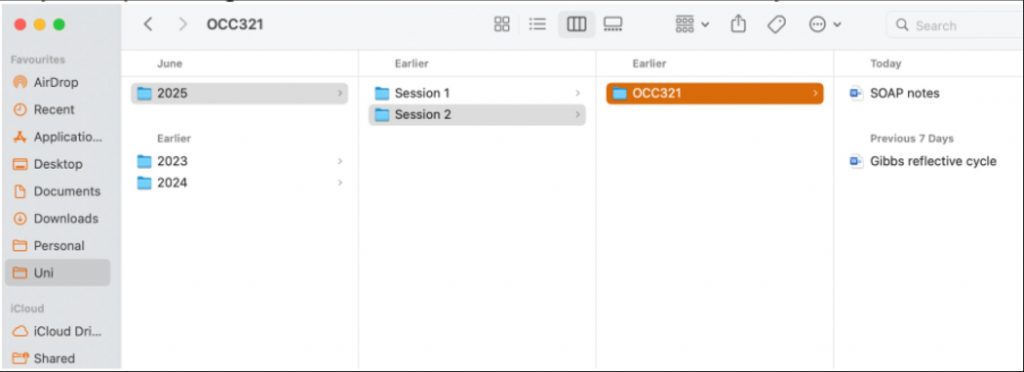
- Organise your desktop – My folder layout looks like the this:
- Uni > 2025 > Session 1 > OCC300 > document
- Personal > Medical > document
Note taking:
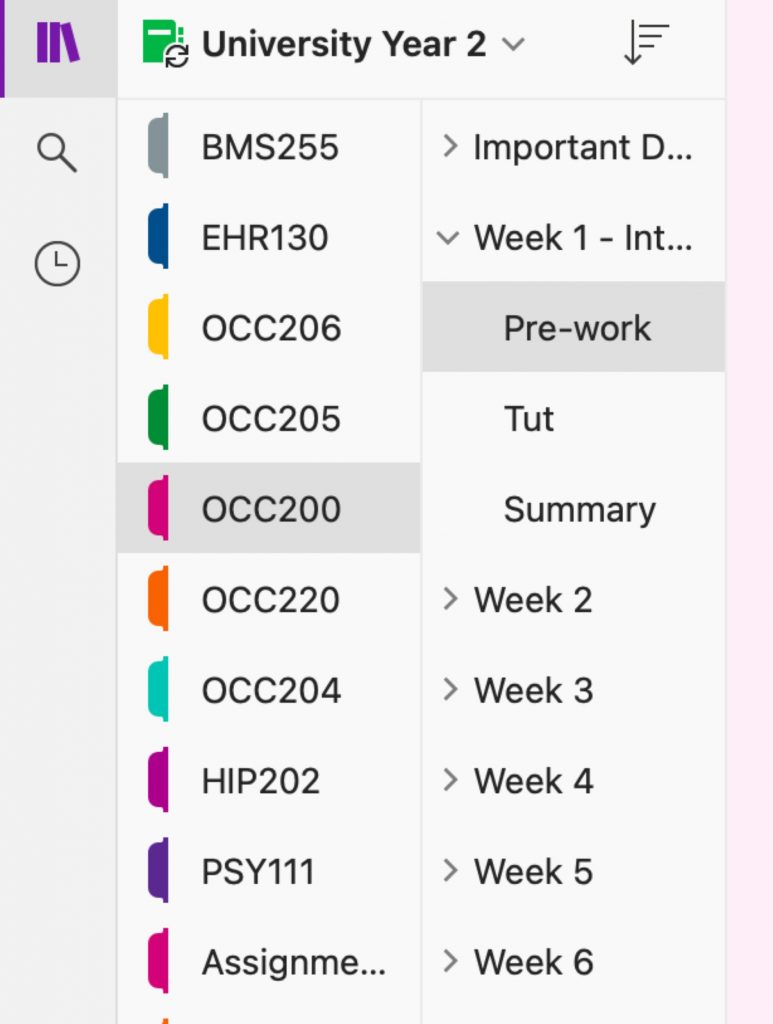
- I personally take my notes on one note, and have found it extremely beneficial to break up my notes into the following folders
- Notebook: University year 3 > OCC300 > Week 4 > document labelled tutorial, workshop or lecture
Mental organisation and wellbeing:
Looking after your mental health and wellbeing really contributes to your state of mental organisation. I find it reduces my levels of stress and overwhelm.
- Creating a healthy weekly routine by organising and integrating study, exercise, social time, work, and down time throughout your week. Utilising a weekly or monthly planner helps me incorporate all these area’s
Daily life:
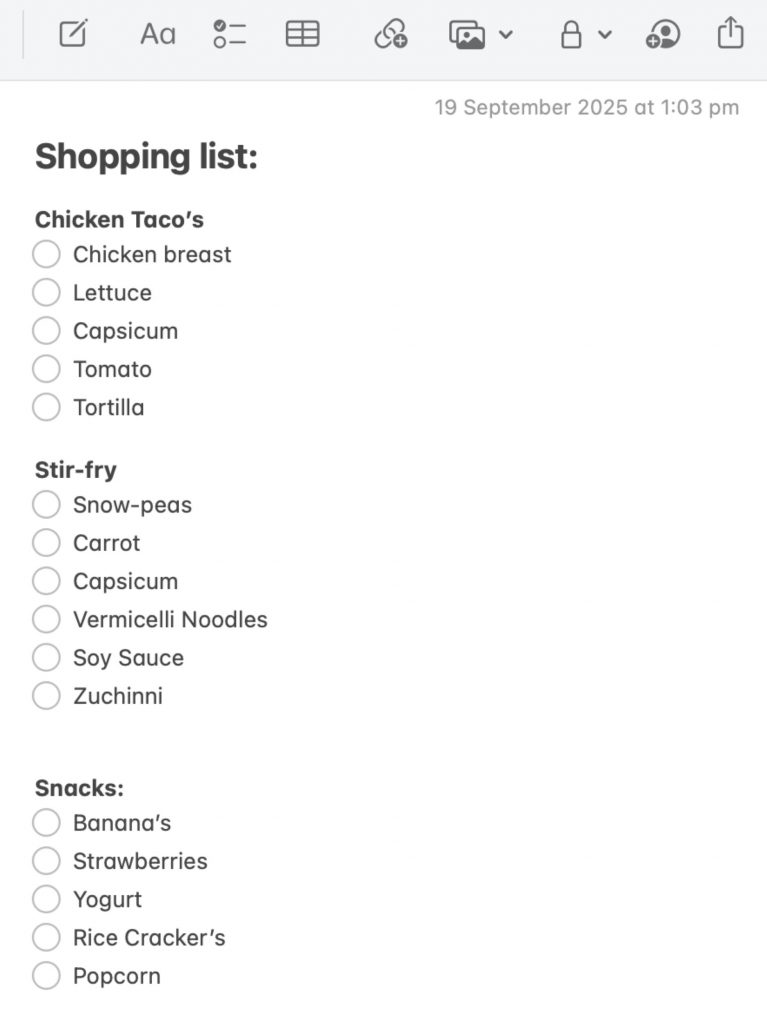
- Meal planning –Each week I plan a list of meals I am going to make and create a shopping list based on that. It saves time, helps me stick to a budget and ensures I don’t forget to buy things I need.
- Using a daily to-do list – helps me prioritise and organise my day. It allows me to stay on top of things such as chores, events, errands, and study tasks.
Charlie blog is a SSAF funded initiative.