
Written by Theresa Arden
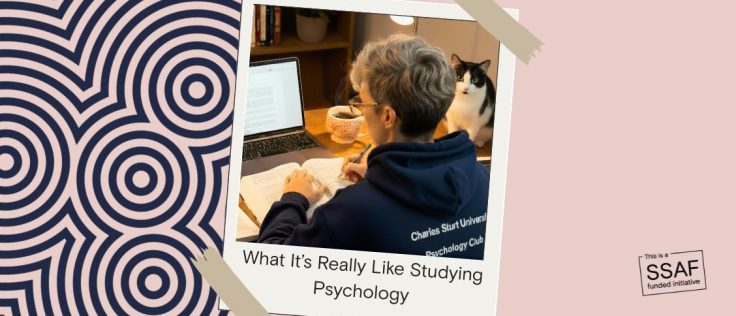
Mention you’re a psychology student, and you’ll see a familiar flicker of intrigue. Some people lean in, hoping you’ll reveal their deepest secrets, while others laugh nervously and say, “Don’t psychoanalyse me!” The reality is, we’re not mind-readers. We’re more like detectives, learning to piece together the clues of human behaviour—even if it means untangling a journal article that reads like Shakespeare and maths had a very complicated baby.
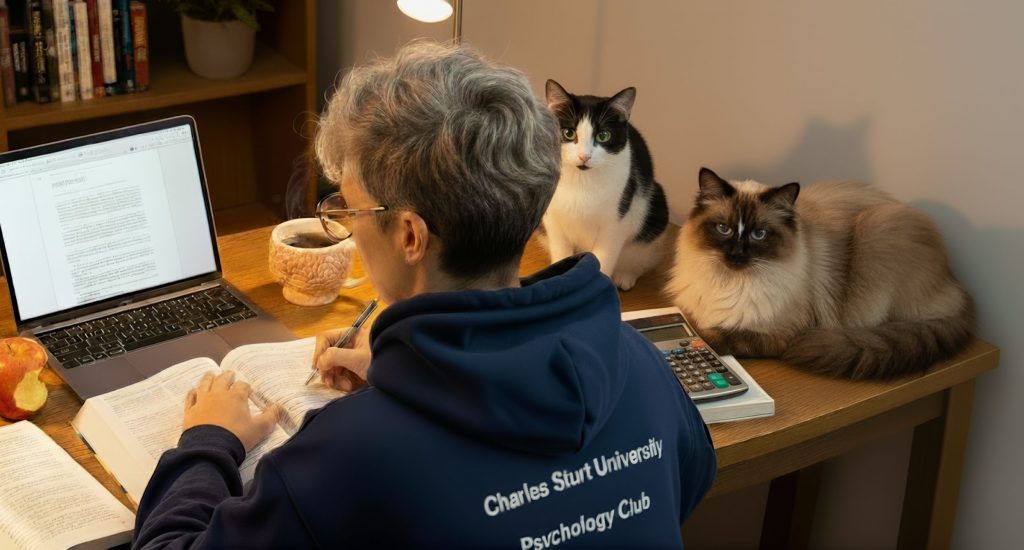
When I first enrolled, I imagined myself in a leather armchair, nodding thoughtfully about repressed desires and mother issues. My vision was less university lecture and more prime-time drama, uncovering hidden traumas in a single, insightful monologue. The truth? Freud got a polite mention in the first year and then we moved on. Psychology, it turns out, has been busy for the last century.
What they don’t put on the glossy brochure is the moment you graduate from talking about theories to actually testing them. This is where the stats come in. You might sign up for the deep conversations, but you stay for the thrill of watching raw data transform into a real discovery. It’s you, a spreadsheet, and a program like SPSS. Some nights are a battle, but when you finally prove a hypothesis, you feel less like a student and more like a scientist.
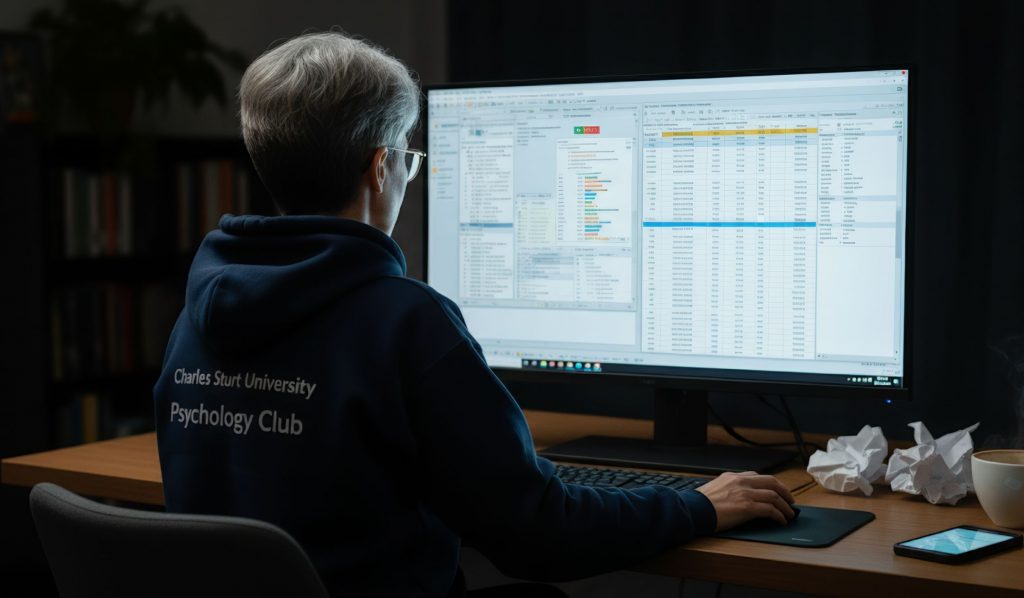
This is the real work of psychology. It’s not always wise smiles and profound questions; it’s meticulously measuring a blink-and-you-miss-it reaction time and figuring out what it means. It’s this rigorous process that turns a simple hunch into solid evidence. Think of it as part detective show, part puzzle. When the pieces finally click into place, you’ve wrestled a piece of chaos into order, and it feels like a superpower.
Then comes the rite of passage for every psych student: the self-discovery phase. Every lecture becomes a mirror. Anxiety? That sounds familiar. Attachment Issues? Let’s explore that. Suddenly, you’re seeing it everywhere. It’s not about self-diagnosis so much as it is about self-awareness. You’re applying what you learn to the subject you know best: yourself.
Because here’s the real secret: psychology isn’t about “fixing” people, it’s about understanding them. It takes “common sense” and puts it under a microscope. Sure, it seems obvious that lack of sleep makes you cranky, but psychology asks for proof. It’s the difference between seeing the movie trailer and watching the full film, complete with all the plot twists. It explains why we buy things we don’t need and why “just five more minutes” on Netflix turns into binge-a-thon.

This new understanding will start to colour your world. Reality TV is no longer just a guilty pleasure; it’s a fascinating case study in groupthink. A quiet café becomes a field observation of human connection. People may joke about you being their “free therapist,” but what you’re really becoming is someone who sees the hidden patterns that drive the world.
So, what is it really like? You don’t get a crystal ball. You get a new lens. It’s a lens that makes the world endlessly fascinating, where the ordinary becomes extraordinary and every day is a small social experiment. And honestly? That’s way better. Even if SPSS still thinks you’re asking too much of it.
Charlie blog is a SSAF funded initiative.