

Written by Tess Ezzy
When I first started studying online, I wasn’t sure if Orientation would be worth showing up for. I’d studied at other universities before, so I figured I already knew the basics. I could find my way around a learning portal, submit assignments, and read lecture slides. But what I didn’t realise was that each university has its own rhythm, its own systems, and its own way of doing things.
Orientation wasn’t just a series of sessions. It was a crash course in understanding how Charles Sturt worked, how it’s systems fit together, who to contact, and how to get the most out of being a student here. It was also, unexpectedly, a chance to meet people who reminded me that even online, we’re not studying in isolation.
That first week changed how I thought about online learning. It made me realise that Orientation isn’t about ticking a box, it’s about belonging. Even through a screen, it can help you feel grounded and confident before the session begins.

Faculty Orientation: Finding your footing
At my first Faculty Orientation, I logged in, expecting admin talk and rule reminders. Instead, our Course Director shared her own study struggles of juggling work, family, and self-doubt — and it instantly put everyone at ease. When someone asked, “What if I’m not ready for university-level writing?” she smiled and said, “That’s what we’re here for. No one’s ready at the start.” That stuck with me. I left not just with course notes, but with peace and confidence. I was reminded that uncertainty is normal, and support is always there if you ask.
The workshops that opened doors
A few days later, I joined an Academic Skills workshop, and quickly realised how much I didn’t know. When the presenter asked, “Who here knows what referencing style their faculty uses?”, I froze. The session compared APA, Chicago, and Harvard side by side, and I remember thinking how many marks I could have lost if I hadn’t attended.
Later that week, a library workshop introduced me to EndNote, a tool that automatically organises sources and makes referencing effortless. I downloaded it that afternoon and haven’t looked back. If you’re new to academic writing, or just tired of retyping every citation, it’s one of those tools you’ll thank yourself for learning early.
What stood out most in these workshops was the mix of expertise and empathy. The presenters understood that online students juggle work, family, and study, and they created sessions that were practical, supportive, and reassuring. A reminder that behind every help page at Charles Sturt are people who genuinely want you to succeed.
Meeting people in unexpected places
The Online Welcome Event was the last thing on my Orientation list, and I almost didn’t go. It was a Thursday night, I was tired from work, and I told myself I’d just log in for ten minutes. Ninety minutes later, I was still there, laughing with people I’d never met about the snacks we’d all brought “just in case.” Everyone was there for the same reason, to connect, to feel less alone, to share that mix of nerves and excitement before the session began.

By the end, a few of us had swapped contact details and promised to check in once the semester started. One became my study partner; another, a close friend I still message when deadlines pile up. Orientation reminded me that the people you meet early on often become the ones who keep you going, celebrating wins, sharing frustrations, and reminding you that you’re never studying alone.
Why showing up matters
Looking back, I can see that Orientation gave me three things that have carried me through every session since: clarity, confidence, and connection.
Clarity: because I finally understood how my course was structured and what was expected of me.
Confidence: because I knew where to go for help and how to use the tools available to me.
Connection: because I had met people, both staff and students, who reminded me that I wasn’t doing this on my own.
You don’t need to have your camera on the whole time. You don’t even need to say much if you’re shy. But showing up matters. Listening matters. Asking one small question can lead to an answer that changes how you study for the rest of your degree. Orientation is your soft landing into university life. Sometimes, it’s the smallest conversations that make the biggest difference.
A final note
If you’re wondering whether Online Orientation is worth it, take it from someone who almost didn’t go. It absolutely is. It’s where you learn how your course really works, where you discover the tools that will make studying easier, and where you start to build a network of people who get what you’re going through.
So, show up. Ask the questions. Learn the software. Download EndNote. And take a moment to enjoy it. Because one day you’ll look back and realise that this was where it all began, not just your course, but your confidence.
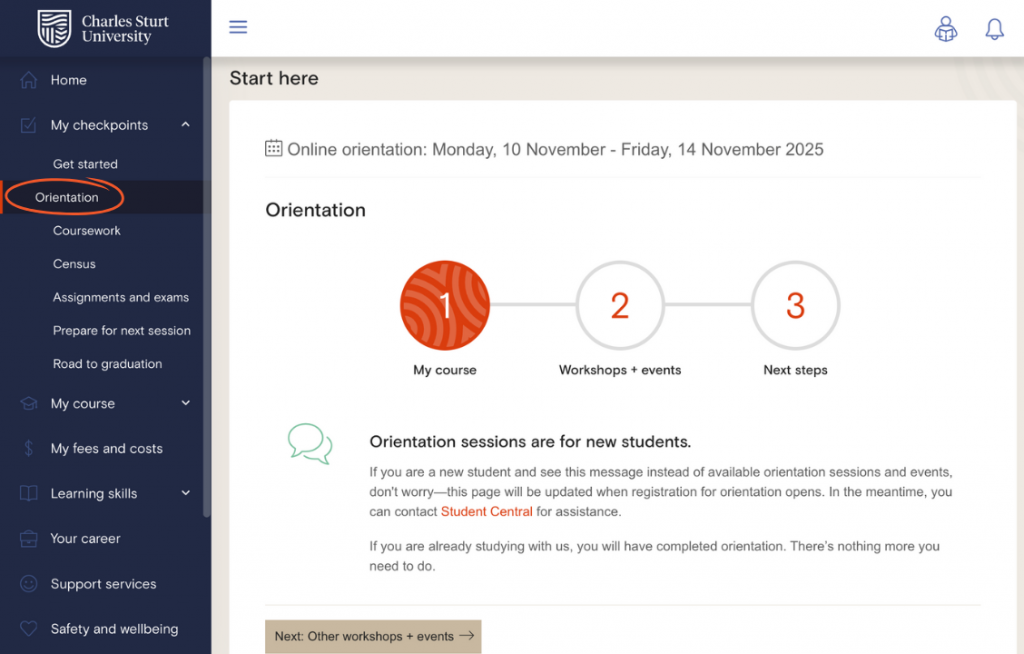
To register for faculty sessions, workshops or welcome events, visit the Orientation Checkpoint in the Student Portal.
Charlie blog is a SSAF initiative.