
Written by Natalie Hoy
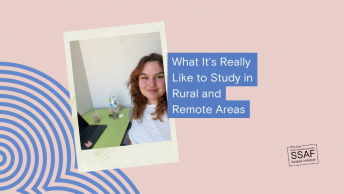
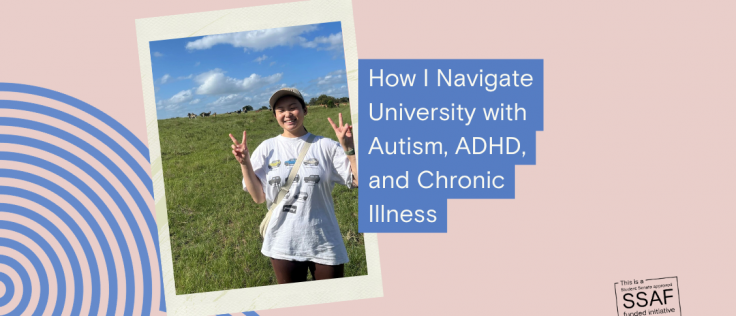
Hi, I’m Natalie, and I am a student with Autism, ADHD (together known as AuDHD) and chronic illnesses, which are all invisible.
Navigating university can be a challenge for anyone, and for me, my invisible disabilities have also affected this, especially in terms of social interactions and masking in workplaces and class settings which often leads me into a constant loop of neurodivergent burnout.
In celebration of Autism Awareness and Acceptance Month last April, I wanted to share some tips that have helped me navigate the different obstacles as a student living with an invisible disability.
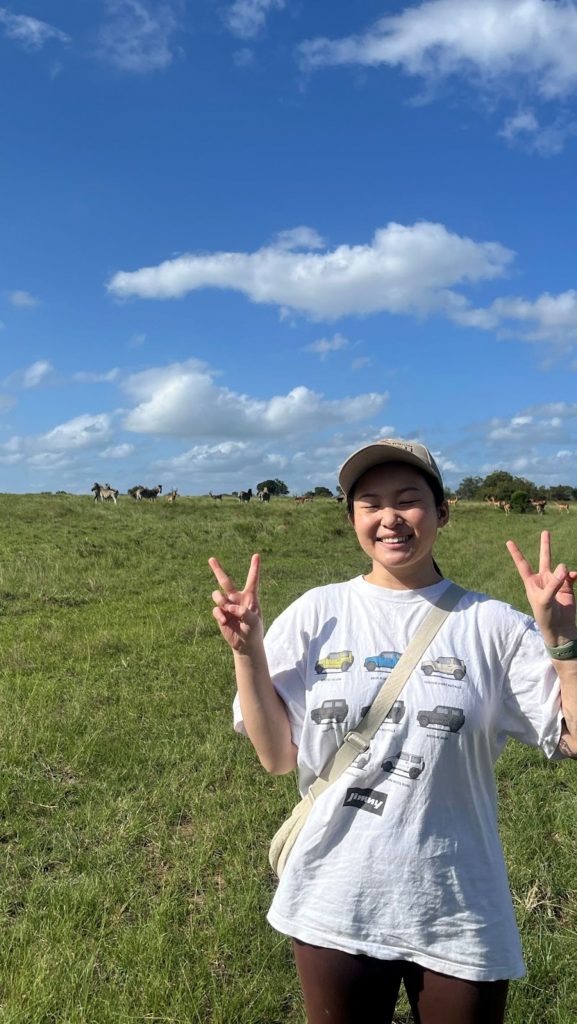
Tip 1: Organised lists with a dedicated purpose
I’m sure it is a universal experience to have a note or list that looks something like this.
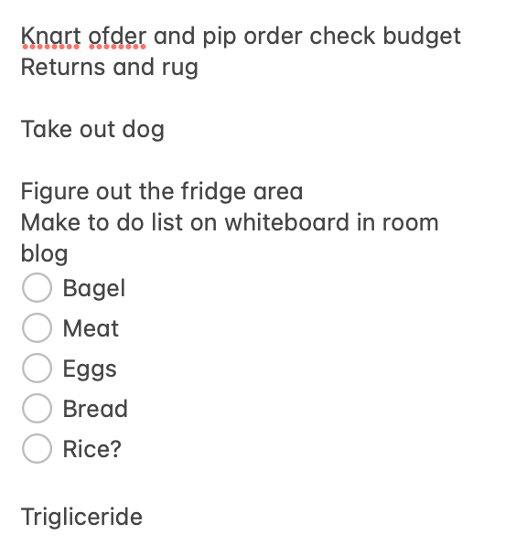
It’s a genuine race writing down the thoughts, ideas, tasks and reminders before I get distracted or forget, which often get lost in translation anyways due to a lack of organisation in the rush to write it all down.
My first tip is to find a note-taking method for quick thoughts that works for you, and is organised with a dedicated purpose.
I have found that a digital note-taking app like the Apple Notes app on my phone can be helpful if I organise it well. My main notes are categorised before I need to rush to write the note, for example the to-do list, shopping list, and ideas list would all be on different pages in the app, often with the title having a date for when the task should be completed.
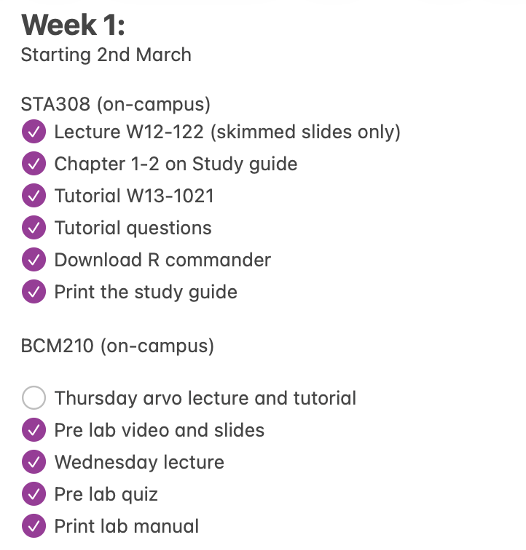
I have made a simple template for my weekly university tasks so I can copy the note over each week and prepare for the upcoming week.
Tip 2: Accommodations and making things accessible
A huge challenge for me during autistic burnout is that everything that I can usually do becomes extremely difficult or impossible. My second tip is to make accommodations for yourself, even in your own home.
Here are a few of my personal examples to help you think of the best accommodations for yourself.
1. Keeping a few ready-made meals in the freezer that you know will be a ‘safe food’ when choosing, making, or eating food is a challenge after an overstimulating day.
2. Setting alarms and reminders for mealtimes, toilet breaks, bedtime, and medication times.
3. Making checklists or to-do lists that include the chores and mundane daily tasks (e.g. turn off the light, brush your teeth, wash dishes, drink water, eat dinner).
Tip 3: Establishing a routine
Establishing a routine which reinforces things you might forget has been a game changer. My night routine consists of showering, brushing my teeth, then putting my night medication (which is kept in the bathroom) in my mouth. The bitter taste forces me to finish the rest of the tasks quickly.
I then refill my water bottle in the kitchen, check for any left-over dishes to wash before turning off the lights from the kitchen side of the house to the bedroom side. If I turn off the lights in order, it helps me make sure that they are all turned off by the time I am in bed. I bring my freshly filled water bottle with me, so that at this point, I can take my medication and go to bed.
Tip 4: Embrace your neurodivergent brain
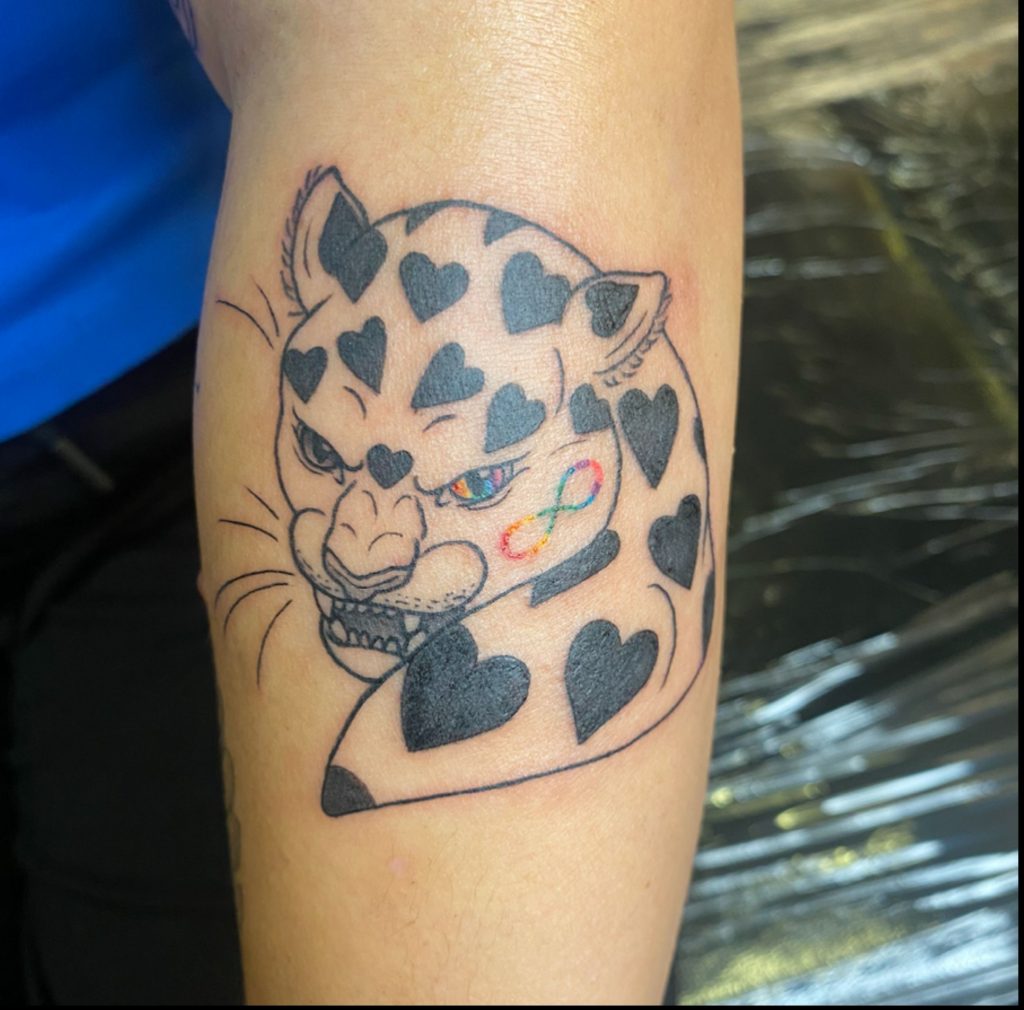
After years of not understanding why my brain worked the way it did, I became the happiest when I started accepting and appreciating my AuDHD. I got a tattoo of the Autism symbol (the rainbow infinity symbol) in celebration of this a few years ago.
Find information about Autism and AuDHD support at Charles Sturt https://www.csu.edu.au/current-students/support/personal/accessibility-inclusion
Charlie blog is a SSAF initiative.