
Written by River Greer
Most of my study sessions start the same way: laptop open, notes out, and a playlist already queued up before I’ve even fully committed to doing any actual work. If there’s no music playing, my brain acts like it’s on strike. Silence suddenly feels unnatural, like I’ve forgotten how studying works and I’m just sitting there for fun.
With music though, I’m locked in. Focused. Productive. Basically a genius… until I realise I’ve spent 15 minutes curating the perfect playlist instead of writing a single sentence. That’s when I started wondering: is music actually helping me study, or am I just emotionally attached to my own procrastination soundtrack?
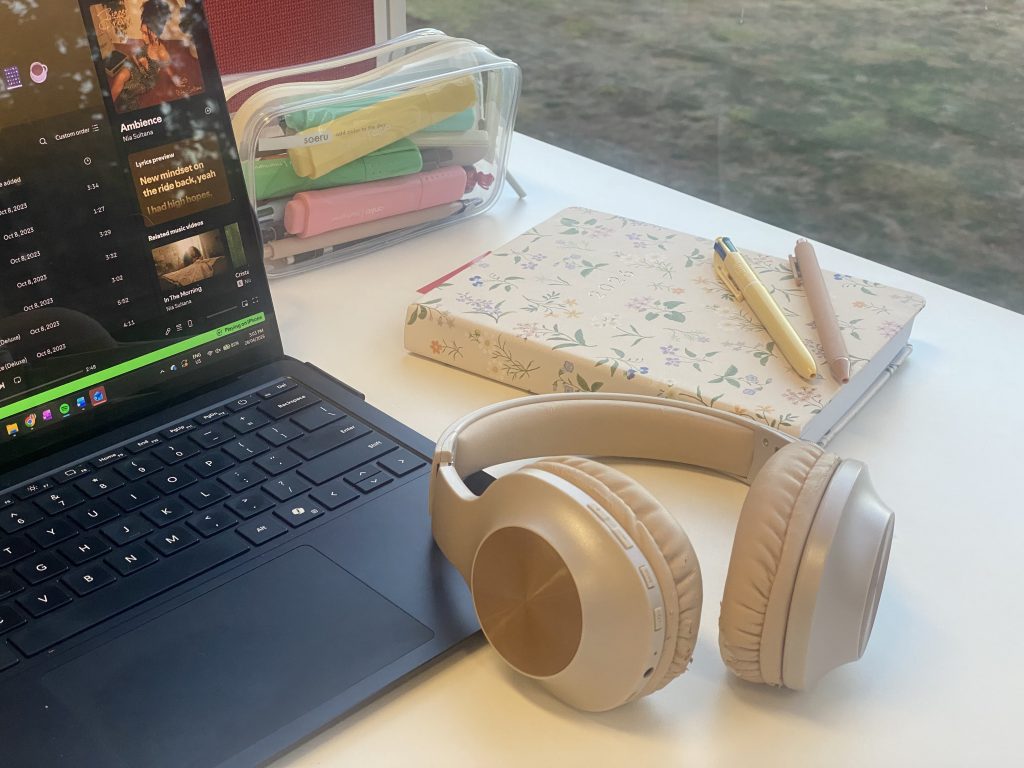
Apparently, I’m not alone in this. Walk into any library and you’ll see it everywhere: rows of students, all wearing headphones like they’re preparing for a very quiet concert. Some are on lo-fi beats, some are on intense “lock in and fix your life” playlists, and a few brave souls are studying in silence like they’ve unlocked some higher academic level the rest of us haven’t reached yet. Either way, everyone has a study soundtrack, even the people who claim they don’t.
But this is where it gets complicated. Some days, music turns me into a productivity machine. Other days, I spend more time skipping songs than actually working. So clearly, it’s not as simple as “music equals focus.” It depends on the day, the assignment, and whether I’ve accidentally drifted into vibing instead of studying.
From what I’ve looked into, there’s actually some science behind it. Music can help with focus and motivation, but it really depends on what you’re listening to. Instrumental or low-distraction music tends to work best because it fills silence without pulling your attention away. Lyrics, on the other hand, are basically chaos for your brain when you’re trying to read or write because you end up processing words you don’t need while trying to produce words you do. So yes, science is basically saying: ‘music can help… but also, you are one catchy chorus away from forgetting what your essay is about.’
And honestly, I feel that in real time. Different types of music completely change how I work. Lo-fi makes me feel calm and vaguely academic, like I should be solving complex problems in a minimalist apartment. Classical music makes everything feel dramatic in a productive way, like I’m in a montage scene of becoming my best self. But anything with lyrics? That’s where things fall apart. Suddenly I’m not writing an essay; I’m emotionally invested in three different songs and completely unaware of deadlines.
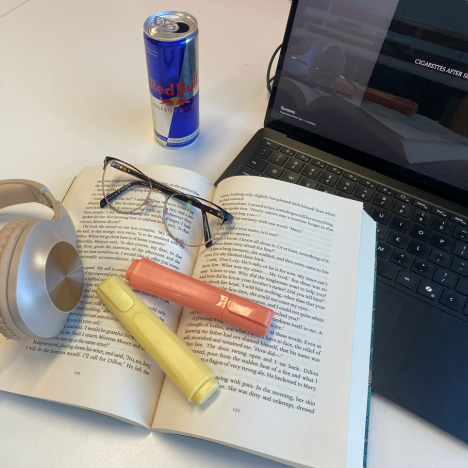
When I get it right though, music does something kind of amazing. It turns studying into something almost enjoyable. Highlighting notes feels cinematic. Writing essays feels like I’m in a productivity movie. Even small tasks feel a bit more intentional, like I’m actually doing something important instead of ‘just surviving’ uni. It’s not just background noise; it’s what makes the whole experience feel less like a chore and more like a moment I can actually get through without losing my mind.

At the end of the day, music isn’t a perfect study hack. It’s more like a slightly unreliable friend who either helps you thrive or distracts you completely, with no warning in between. But I’ll still keep using it, because if I have to study anyway, I’d rather do it with a soundtrack.
Because honestly, maybe studying in silence is efficient… but studying in stereo feels like living.
Charlie blog is a SSAF initiative.